Skip to content
-
  • About Us
  • Contact Us
  • Disclaimer
  • Editorial Policy
  • Privacy Policy
  • Terms & Conditions
  • Facebook
  • Twitter
  • Instagram
  • YouTube
  • Linkdin
Bharat 360 News4Bharat Bharat 360 News4Bharat Bharat 360 News4Bharat

News - As It Is

Bharat 360 News4Bharat Bharat 360 News4Bharat Bharat 360 News4Bharat

News - As It Is

  • Home
  • Jobs
  • MSME
  • Schemes
  • Scholarships
  • Education
    • Admission Form
    • Admit Card
    • Result
  • Smart City
  • Green India
  • Infrastructure
  • Administration
    • shuffles
    • transfers
  • Defence
  • Home
  • Jobs
  • MSME
  • Schemes
  • Scholarships
  • Education
    • Admission Form
    • Admit Card
    • Result
  • Smart City
  • Green India
  • Infrastructure
  • Administration
    • shuffles
    • transfers
  • Defence
Subscribe
Close

Search

Home/Infrastructure/Something Big Is Rolling Out of Bengaluru in 2027 — And It Runs at 280 kmph
Meet B28 — The Train India Is Building From Scratch
InfrastructureSmart City

Something Big Is Rolling Out of Bengaluru in 2027 — And It Runs at 280 kmph

By Sweekriti Raj
June 24, 2026 3 Min Read
0

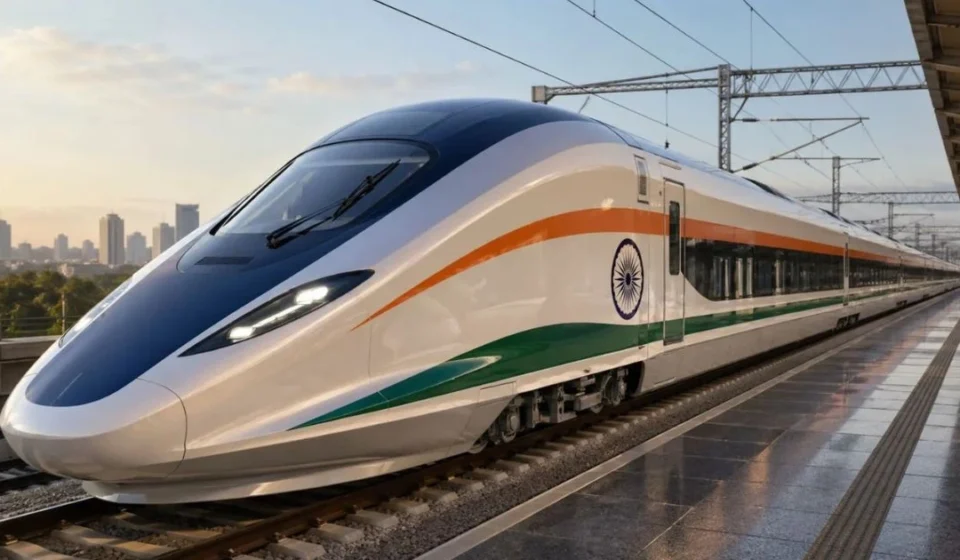
India is not just planning a bullet train—it is building one on its own. The B28, India’s first fully indigenous bullet train, is being designed and developed within the country, marking a major step forward for the nation’s railway technology.

The project is expected to showcase India’s growing capabilities in high-speed rail and advanced engineering. What makes it even more significant is the pace at which work is progressing. While much of the attention remains on imported technology and international partnerships, the B28 project is quietly moving ahead, bringing India closer to joining the league of nations with homegrown bullet train technology.

Meet B28 — The Train India Is Building From Scratch

The project gained momentum when the Integral Coach Factory awarded an ₹867-crore contract to Bengaluru-based BEML to design and manufacture India’s first indigenous high-speed trains.

Engineers are building the B28 train to operate at around 250 kmph, with a top speed of 280 kmph. They are also designing the rail infrastructure to support speeds of up to 320 kmph in the future. The train will offer modern passenger amenities, advanced safety features, and improved comfort designed for Indian weather and railway conditions.

Even its name reflects the project’s goal. “B28” stands for Bharat and 280 kmph, highlighting India’s ambition to develop a world-class high-speed train using homegrown technology.

Which City Gets India’s First Bullet Train Ride?

The B28 bullet train will first run on the Surat–Vapi section before gradually expanding to the larger Mumbai–Ahmedabad High-Speed Rail Corridor. Once operational, the faster service is expected to stop only at Surat and Vadodara, cutting travel time between Mumbai and Ahmedabad to just over two hours. Services with more stops are likely to complete the journey in less than three hours. For comparison, the same trip currently takes around seven hours on conventional trains.

But this is just the beginning. The government’s long-term vision goes far beyond a single route, raising an even bigger question—where could India’s homegrown bullet train go next?

Seven More Routes Are Already in the Pipeline

The Mumbai–Ahmedabad corridor may be only the first step in India’s high-speed rail journey. Government plans are evaluating several other routes, including Delhi–Varanasi, Chennai–Bengaluru, Bengaluru–Hyderabad, and Mumbai–Pune. Railway officials see the Mumbai–Ahmedabad project as a model that could shape future bullet train corridors across the country.

If the project succeeds, India could build a larger high-speed rail network connecting major cities across the country. At the same time, companies are steadily expanding the manufacturing infrastructure needed to support this vision.

The Factory Behind the Future

BEML has already started work on the B28 bullet train at its manufacturing facility in Bengaluru. Railway Minister Ashwini Vaishnaw inaugurated the facility, which will play a key role in building India’s first indigenous high-speed train.

The first B28 prototype is likely to be ready by early 2027. After completing the manufacturing process, engineers will send the B28 train to a dedicated depot in Surat for further evaluation. Engineers will conduct months of testing and safety checks before clearing the train for passenger service. The testing phase will help engineers evaluate the train’s performance, reliability, and readiness for high-speed operations.

Why This Matters Beyond Railways?

Experts believe that building bullet trains in India can reduce costs over time and may also create future opportunities for exports, technology development, and stronger railway infrastructure.

BEML is developing these high-speed trains in India to reduce the country’s dependence on imported Japanese train technology. But the bigger story goes beyond self-reliance. If the project succeeds, India could eventually move from importing high-speed trains to exporting them—a shift that has received far less attention than it deserves.

India is not just building a bullet train. It is building the capability to build bullet trains. And that changes everything.

Frequently Asked Questions

Q1. When will India get a bullet train?
Ans. India is expected to run a bullet train by 2029.

Q2. How much does each B28 coach cost?
Ans. Each coach costs approximately ₹28 crore.

Q3. How much time will B28 take from Mumbai to Ahmedabad?
Ans. The B28 will cover Mumbai to Ahmedabad in just over two hours.

Q4. How many routes are planned for bullet trains in India?
Ans. The government has identified seven additional high-speed rail routes beyond the Mumbai–Ahmedabad corridor.

Q5. Does India still depend on Japan for bullet train technology?
Ans. No. BEML is now developing indigenous high-speed trains to reduce dependence on Japanese rolling stock.

Author

Sweekriti Raj

A Passionate content writer about storytelling and journalism who covers breaking news, education, technology, business, government policies, and trending stories. She focuses on delivering accurate, well-researched, and easy-to-understand news that keeps readers informed with clear, engaging, and reliable content.

Follow Me
Other Articles
Bihar Police CSBC Constable Operator Admit Card 2026 Out
Previous

Bihar Police CSBC Constable Operator Admit Card 2026 Out— Check Exam Date, Centre and Hall Ticket Link

NHAI signs MoU with NCAER to establish Centre for Economics of Transportation Mobility and Logistics
Next

NHAI Signs MoU with NCAER to Boost Road Transport Research

No Comment! Be the first one.

Leave a Reply Cancel reply

Your email address will not be published. Required fields are marked *

In a nation with Billion stories, no single lens is enough. Bharat 360 brings you every perspective - from government schemes and jobs to smart cities and green initiatives.

Menus

  • About Us
  • Contact Us
  • Disclaimer
  • Editorial Policy
  • Privacy Policy
  • Terms & Conditions
  • Facebook
  • Instagram
  • LinkedIn
  • YouTube
  • X
  • Indian Army’s New Units Could Change How India Fights Wars
  • Your Small Town May Get an Airport Soon — Here’s What Modified UDAN Plans
  • IIT Delhi Launches Special PhD Admission Drive 2026 for SC/ST Candidates
Copyright 2026 — Bharat 360 News4Bharat. All rights reserved.