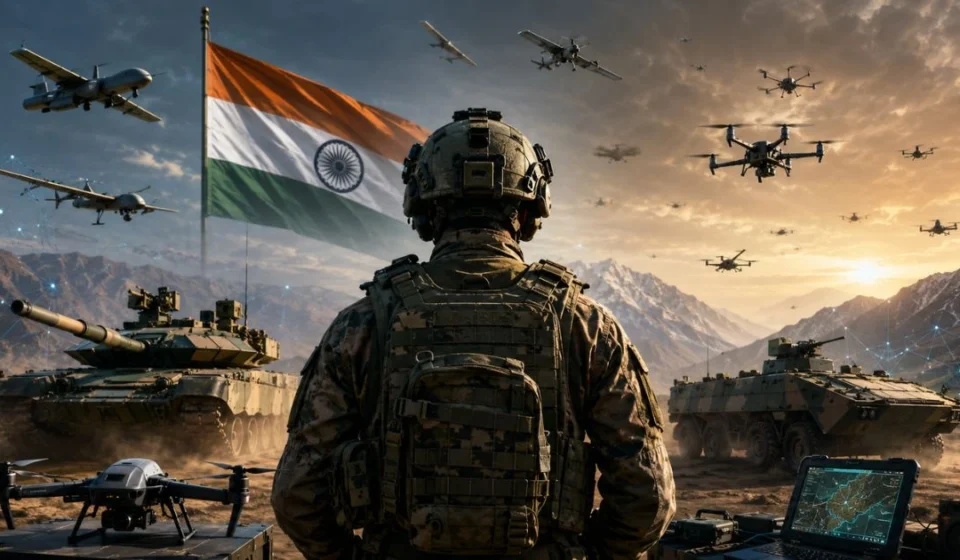

The Indian Army is making one of its biggest changes in years—and it’s all about preparing for the wars of the future.
On his last day as Army Chief, General Upendra Dwivedi revealed major changes in the Army’s structure. The focus is on building a force that can respond faster, use drones more effectively, and fight with better coordination across different combat units.
On Tuesday, June 30, 2026, General Dwivedi officially handed over charge to Lieutenant General Dheeraj Seth. Before leaving office, he explained that the way wars are fought has changed—and the Indian Army is changing with it.
His message was clear: the Army is no longer preparing for the battles of the past. It is building a modern, technology-driven force that is ready for the challenges of tomorrow.
Also Read: India Just Knocked on the Gulf’s Defence Door — and UAE Opened It Wide
Army Chief’s Last Message Before Retirement
“The nature of war is changing quickly, and the Indian Army is changing with it,” General Upendra Dwivedi said. He explained that modernisation is no longer just about buying new weapons. It also means improving training, using advanced technology, and changing the Army’s way of thinking.
As part of this transformation, the Army has introduced several new combat units, each designed for a specific role on the battlefield.
- Rudra Brigades bring together infantry, tanks, artillery, drones, and other combat units under one command for faster and better-coordinated operations.
- Bhairav Battalions are specialised units for quick attacks and counter-terrorism missions.
- Shaktibaan Regiments are responsible for tactical drone operations and drone warfare at the corps level.
- Divyastra Batteries provide close-range drone support to soldiers fighting on the front lines.
But these changes didn’t happen overnight. A real military operation exposed the need for a faster and more technology-driven Army—and what happened next completely changed how India prepares for war.
Also Read: Vayu Astra-1 Drone Can Now Be Launched from Suryastra Rocket Launcher for Deep Strikes
Operation Sindoor Triggered The Reset
The turning point came during Operation Sindoor in May 2025. The operation was launched after the Pahalgam terror attack and tested how well the Army, Navy, and Air Force could work together during a real military mission.
General Upendra Dwivedi described Operation Sindoor as a symbol of India’s determination, strength, and responsible use of military power.
He said today’s wars are not won by weapons alone. Success also depends on fast information sharing, secure communication, and quick decisions on the battlefield—and that is exactly what the Indian Army is now preparing for.
Why Future Wars Won’t Look The Same?
The Army Chief, General Dwivedi highlighted an important reality that often goes unnoticed. He said future wars may not follow the same pattern. Some conflicts could last for months or even years, while others may be short, fast, and driven by advanced technology. Because of this, the Indian Army is preparing for both possibilities. It wants a force that can handle long, challenging wars as well as quick, high-tech battles—without losing speed or effectiveness.
Also Read: India Launches Three Warships at Once — PM Modi’s Biggest Naval Statement Yet
India Bets On Homegrown Weapons
The Indian Army is also working more closely with DRDO, private companies, and startups to develop and test advanced weapons faster. The aim is to build more Made-in-India defence technology that meets the country’s security needs.
Now, with Lieutenant General Dheeraj Seth taking charge as the new Army Chief, the focus shifts to the Army’s next phase.
These new combat units have been created and the strategy is in place—but the biggest question remains.
Will these reforms prove themselves when India faces its next real battlefield challenge?
Frequently Asked Questions
Q1. What are the new combat units in the Indian Army?
Ans. The Indian Army has raised Rudra Brigades, Bhairav Battalions, Shaktibaan Regiments, and Divyastra Batteries to boost speed, drone warfare, and joint combat power.
Q2. Who is the new Indian Army Chief?
Ans. Lieutenant General Dheeraj Seth took over as Army Chief from General Upendra Dwivedi on Tuesday, June 30, 2026.
Q3. What is a Rudra Brigade?
Ans. A Rudra Brigade combines infantry, armour, artillery, special forces, and drones under one unified command structure.
Q4. What do Shaktibaan Regiments do?
Ans. Shaktibaan Regiments handle tactical drone and counter-drone operations at the corps level, equipped with UAS and loitering ammunition.
Q5. Why is the Indian Army restructuring its forces?
Ans. Lessons from Operation Sindoor in May 2025 pushed the Army to build faster, tech-driven, and better-coordinated combat units.