

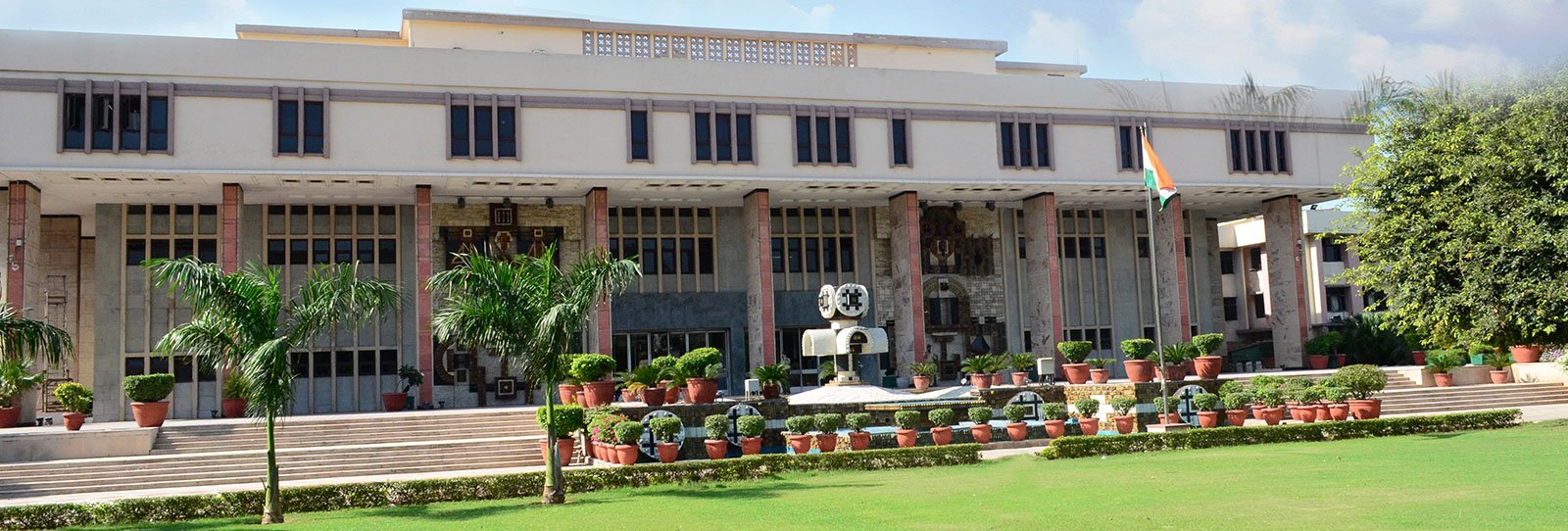
Delhi High Court’s Key Judgments on May 29, 2026: Bail, Pension, TRAI Ad Cap, Income Tax Notices and Pharmacy College Approvals

The Delhi High Court delivered a series of significant judgments on May 29, 2026, touching upon criminal law, tax reassessment, pension rules, broadcasting regulation, pharmacy education approvals and civil property disputes. The orders, passed by different benches of the court, are likely to have wider relevance for litigants, government departments, pensioners, broadcasters, educational institutions and accused persons facing criminal trials.
Judgement on Cases by Delhi High Court on 29th May
- In one of the major criminal matters, Justice Anup Jairam Bhambhani granted regular bail to Amit Kumar Masuriya in an NDPS case linked to an alleged drug manufacturing and trafficking investigation. The court noted the issue of non-supply of written grounds of arrest and referred to constitutional safeguards under Article 22(1).
- The court granted bail to the petitioner on a personal bond of Rs 1 lakh with two family sureties. It also imposed conditions requiring him to surrender his passport, avoid contact with witnesses, and refrain from tampering with evidence.
- In another bail matter, the High Court granted regular bail to Wahidur Rahman in a PMLA case connected with alleged PFI-related financial transactions. The court observed that Rahman’s role appeared limited at this stage, the trial was likely to take considerable time, and continued incarceration as an undertrial was not warranted. The court directed him to furnish a bond of Rs 50,000 with one family surety and comply with other bail conditions.
- The court also dealt with a criminal petition filed by Ritik, who had challenged the dismissal of his plea for recall of non-bailable warrants. Justice Girish Kathpalia allowed the petition, recalled the warrants and imposed a cost of Rs 10,000 to be deposited with DLSA, West, while warning the petitioner to remain diligent in future court appearances.
- A major ruling came in the pension commutation matter, where the Delhi High Court upheld the validity of the uniform 15-year restoration period for commuted pension. The court dismissed the pensioners’ challenge to Rule 10-A of the CCS Commutation Rules and similar provisions applicable to railway, defence, bank and other pension regimes. The bench held that the 15-year rule was based on actuarial evaluation, expert recommendations and long-standing statutory practice, and did not suffer from any constitutional infirmity.
- In a long-pending broadcasting regulation case, the High Court upheld TRAI’s power to regulate advertisement duration on television. The court dismissed petitions filed by broadcasters challenging the 12-minute per clock hour advertisement cap, holding that TRAI had acted within its statutory authority and that the regulation served viewer interest, prevented over-commercialisation and did not violate Articles 14 and 19 of the Constitution.
- The court also passed two important income tax reassessment rulings. In Shailendra Nath Rai v. Assistant Commissioner of Income Tax, the bench quashed the Section 148A(d) order and Section 148 notice dated April 30, 2024, holding that the notice was issued beyond limitation. The court reasoned that after excluding the response period, the department had only seven days from April 21, 2024, and the notice ought to have been issued by April 28, 2024.
- However, in Sunil Bhalla v. Deputy Commissioner of Income Tax, the court dismissed the writ petition. It held that the reassessment proceedings were within limitation because the Assessing Officer passed the order and issued the notice on April 16, 2024, well within the computed time period after the petitioner’s adjournment request was rejected.
- In a case involving the Pharmacy Council of India, a Division Bench headed by the Chief Justice dismissed PCI’s appeal against SLS College of Pharmacy. The court agreed with the Single Judge’s view that approval under the Pharmacy Act relates to the entire “course of study” and not year-to-year continuation approval. It found no good ground to interfere with the earlier judgment.
- Justice Anup Jairam Bhambhani also dismissed appeals filed by former occupants of quarters at Shivaji Lines, Roshnara Building, Shakti Nagar, Delhi, against Texmaco Infrastructure and Holdings Limited. The court held that the appellants were licensees, their licence ended with cessation of employment, and they had no right to continue occupying the premises. The court directed them to vacate and hand over peaceful possession within four weeks.
- In another criminal writ petition, the High Court set aside an order of the Chief Judicial Magistrate that had imposed travel restrictions on petitioners Shabir Momin and another. The court held that the Magistrate had no jurisdiction to add a new bail condition under the garb of “clarification” after the original bail order. However, considering that the petitioners had earlier travelled abroad without permission while the order was in force, the court directed each petitioner to pay Rs 2 lakh as costs to Friendicoes SECA.
- In a cheque dispute-related criminal petition filed by VE Commercial Vehicles Ltd., the High Court refused to interfere with the trial court’s order allowing the accused one opportunity to cross-examine the complainant’s authorised representative. The court said the trial court had given cogent reasons and had balanced the matter by imposing costs, adding that the purpose of trial is to find the truth and decide the matter on merits.
The Delhi High Court’s May 29 judgments covered a wide legal canvas — from personal liberty and fair arrest procedure to tax limitation, pension policy, regulatory control over television advertising and institutional autonomy in professional education. The rulings also underline the court’s recurring emphasis on procedural fairness, constitutional safeguards and careful limits on judicial interference in policy-driven matters.
You may also like –



[…] Also Read: Delhi High Court’s Key Judgement on 29th May 2026 […]