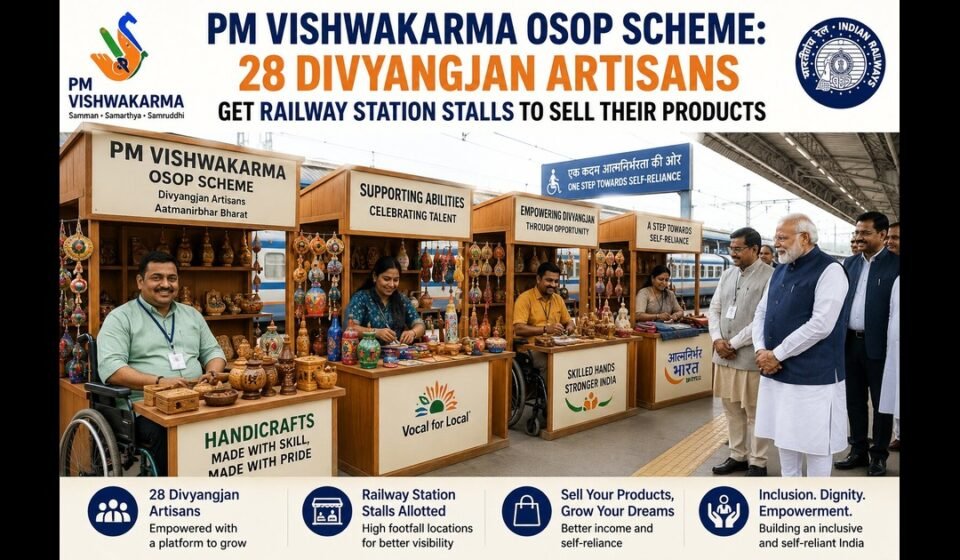
PM Vishwakarma OSOP Scheme: 28 Divyangjan Artisans Get Railway Station Stalls to Sell Their Products

What Is the OSOP Initiative Under PM Vishwakarma?
PM Vishwakarma is a flagship central government scheme that rests on three pillars: Samman (Respect), Samarthya (Capability), and Samriddhi (Prosperity). Specifically, the OSOP initiative falls under the Samriddhi pillar, and it aims to help Divyangjan Vishwakarma artisans market their products at locations where footfall and therefore potential customers runs highest.
Under this initiative, the government sets up dedicated stalls at selected railway stations so that artisans can display and sell items they make by hand. The logic here is simple: greater visibility leads to more sales, and more sales, in turn, create a sustainable income for artisans who otherwise struggle to reach buyers on their own.
28 Divyangjan Artisans Have Already Received Stalls
So far, the Ministry of MSME has allotted stalls to 28 Divyangjan beneficiaries from different trades under the OSOP initiative. Below is the trade-wise breakdown:
| Trade | Total Allotments | States Covered |
| Cobbler | 5 |
Gujarat, Maharashtra, UP, Delhi
|
| Sculpture | 6 | Haryana, Odisha, Bihar, MP |
| Carpenter | 5 |
Maharashtra, Haryana, Bihar, Gujarat, Rajasthan
|
| Doll & Toy Maker | 6 |
Maharashtra, UP, Puducherry, MP, Haryana
|
| Metal Smith | 2 | Jharkhand |
| Basket Maker | 2 |
Madhya Pradesh, Maharashtra
|
| Tailor | 2 | Goa, Haryana |
| Total | 28 | 12 States |
Altogether, these stalls span 12 states and cover a wide range of crafts, from sculpture and carpentry to tailoring and toy-making.
Also Read: PM Surya Ghar Scheme
Success Stories: How OSOP Is Changing Lives
More importantly, the scheme isn’t just about numbers real artisans are now seeing real income. Here are a few standout examples the Ministry has shared.
Take Atul, a Divyang sculptor from Indore, for instance. He specialises in crystal-based statues and utility items. First, he registered under PMV and completed skill training. Then, the Ministry allotted him a stall at Platform No. 1 of Indore Railway Station. Since the outlet opened in January 2026, his sales have climbed steadily.
Similarly, Ajeet Sharma, a Divyang metalsmith, now runs a stall near Deoghar Railway Station, where he sells handcrafted metal products. Within just 15 days, he earned ₹19,000 a clear example of how market access can directly boost income for artisans facing physical challenges.
Likewise, Ghanshyam Kumawat, a carpenter from Jaipur, received a stall near Gandhinagar Railway Station. Through his quality woodwork and furniture, he earned significant revenue within 15 days and, as a result, built strong trust with customers while improving his family’s financial situation.
Also Read: Gujarat Cluster Development Scheme
Why This Matters
For Divyangjan artisans, limited market access has long remained one of the biggest barriers to earning a steady livelihood. However, by placing their stalls at busy railway stations spaces with constant footfall and visibility the OSOP initiative now gives them a real chance to compete and grow, instead of depending solely on middlemen or limited local markets.
Overall, the Ministry of MSME describes this effort as part of a larger push toward economic inclusion and socio-economic empowerment for differently-abled citizens, in line with the broader goals of the PM Vishwakarma Scheme.
How to Know More
If you want to learn more about the PM Vishwakarma Scheme and the One Station One Product initiative, you can visit the official PM Vishwakarma portal for detailed information, eligibility criteria, and registration steps.